
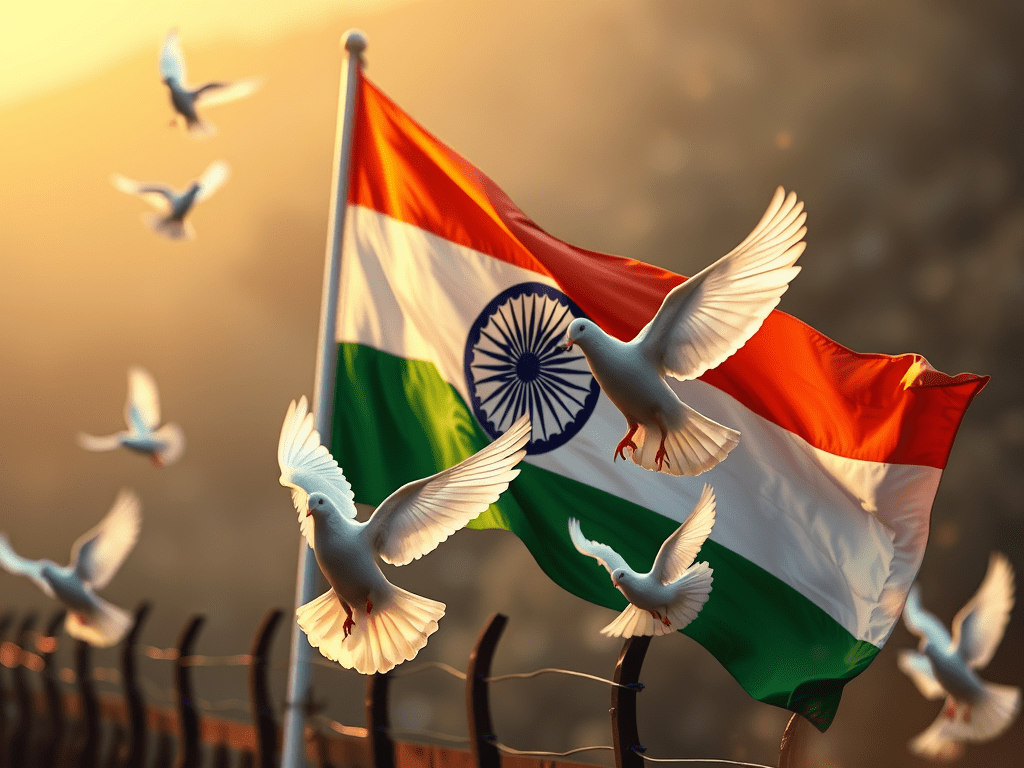
📍 Historical Context | 🔫 War to Words | 🕊️ From Conflict to Ceasefire
🗓️ What is a Ceasefire?
A ceasefire is a temporary suspension of fighting, typically one that is officially agreed upon by both sides in a conflict. Between India and Pakistan, ceasefires have played a critical role in halting wars, restoring peace, and preventing escalation into full-blown regional or nuclear conflict.
India and Pakistan have fought four major conflicts:
- 1947–48 (First Kashmir War)
- 1965 (Second Kashmir War)
- 1971 (Bangladesh Liberation War)
- 1999 (Kargil War)
Each war ended with a ceasefire, often brokered or influenced by international diplomacy and UN intervention.
🇮🇳🇵🇰 Major Ceasefires in Indo-Pak History
🔹 1949 – UN-brokered Ceasefire (First Kashmir War)
- Marked the creation of the Line of Control (LoC).
- Ended large-scale fighting in Kashmir.
- Laid the groundwork for future disputes and peace talks.
🔗 UN Resolutions on India-Pakistan
🔹 1965 – Tashkent Agreement Ceasefire
- War ended on September 22, 1965, with a ceasefire under UN pressure.
- Formalized in Tashkent (Uzbekistan) on January 10, 1966.
- Leaders involved: Lal Bahadur Shastri (India) & Ayub Khan (Pakistan).
🔗 Tashkent Agreement Details – Indian Express
🔹 1971 – Shimla Agreement Ceasefire
- After India’s victory and creation of Bangladesh.
- Ceasefire signed on December 17, 1971.
- Formalized at Shimla in July 1972 by Indira Gandhi and Zulfikar Ali Bhutto.
🔹 2003 – LoC Ceasefire Agreement
- After the Kargil War (1999) and a spike in cross-border firing.
- A verbal agreement to stop shelling across the LoC.
- Reaffirmed in February 2021, showing ongoing commitment to peace.
🌍 Why Are Ceasefires Important?
| Reason | Explanation |
|---|---|
| 🕊️ Prevents Loss of Life | Saves civilians and soldiers from further bloodshed. |
| 🤝 Creates Space for Dialogue | Allows diplomatic channels to open. |
| 📜 Establishes Legal Framework | Agreements like Tashkent and Shimla provide legal basis for future peace. |
| 🛑 De-escalation | Helps reduce tension before nuclear conflict risks emerge. |
💡 Key Values and Lessons from Ceasefires
| Value | What It Teaches |
|---|---|
| Patience | Wars end, but peace takes longer. |
| Diplomacy | Dialogue can achieve what weapons cannot. |
| Humanity | Civilians always suffer most — peace protects them. |
| Forgiveness | Moving forward requires letting go of the past. |
| Respect | Even enemies recognize each other’s right to exist peacefully. |
📽️ YouTube Video Links to Understand Ceasefires
- 🎥 India-Pakistan Wars Explained – BBC Hindi
- 🎥 Kargil War and Ceasefire – Explained by Abhi and Niyu
- 🎥 History of Tashkent & Shimla Agreements – StudyIQ
- “Indo-Pak Ceasefires: How Peace Was Found Amidst Bullets”
- “From Tashkent to Shimla: The Ceasefires That Shaped South Asia”
- “Ceasefire Chronicles: Lessons in Peace from India-Pakistan Wars”
#IndoPakCeasefire #PeaceNotWar #TashkentAgreement #ShimlaAgreement #LOC #IndiaPakistan #KargilWar #WarToPeace #HistoryOfIndia #SouthAsiaPeace
🕊️ Final Thoughts
While wars define boundaries, ceasefires define humanity. The fragile but firm handshake after gunfire reminds us that no matter how deep the conflict, peace is always a possibility — and always worth pursuing.
Let us remember: The real victory is when guns are replaced by goodwill.


Leave a comment