
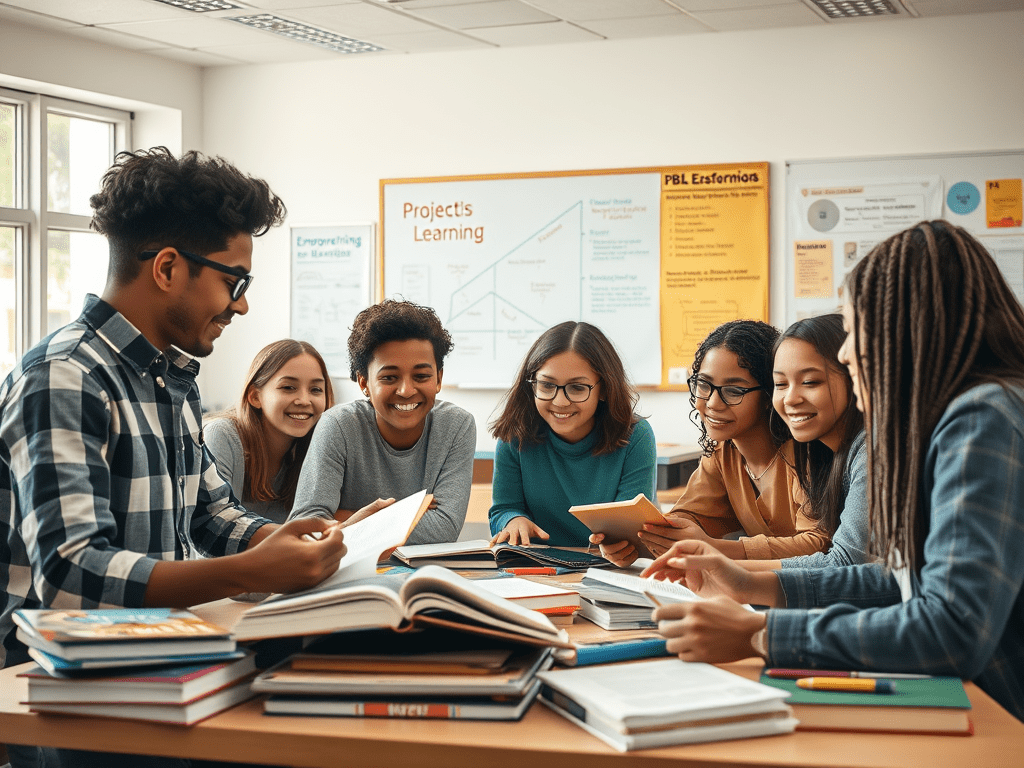
🎯 What is Project-Based Learning?
Project-Based Learning (PBL) is a student-centered educational model that empowers learners to explore real-world problems through planning, research, collaboration, and creation.
Instead of rote memorization or textbook recitation, students engage in authentic problem-solving experiences, guided but not spoon-fed by teachers.
📘 Scientific Backing: According to Thomas Markham (2011), PBL is “the main course, not dessert” – meaning it’s not just an activity, but a robust way to teach critical thinking, collaboration, and creativity all at once.
👩🏫 The Role of Teachers in PBL
Traditional teachers are instructors. But in PBL, teachers become facilitators, guiding students through the stages of inquiry and reflection.
🛠 Teachers in PBL:
- Provide mini-lessons only when needed.
- Encourage independence.
- Offer personalized support and scaffolding.
- Help students reflect on their learning journey.
💡 Quote: “In PBL, the teacher’s voice is important, but the student’s voice is central.”
🔍 Core Elements of PBL (and Why They Matter)
1. Driving Questions
Guide students to tackle a real-world issue. Examples:
- How can we reduce plastic waste in our school?
- What can we learn from local water shortages?
2. Entry Events
Kickstart curiosity! Use a video, guest speaker, or a field trip.
3. Student Research
Learners collect, analyze, and synthesize their own data.
4. Reflection
Students assess what they learned and how they learned it.
5. Culminating Events
Showcase student work to the public—builds pride, real impact, and presentation skills.
🧠 Why PBL Works – The Scientific Connection
📚 Evidence from Neuroscience:
- Active learning increases dopamine levels—improving engagement and memory.
- Real-world problem-solving activates the prefrontal cortex, the center of reasoning and planning.
- PBL leads to deeper learning—a 2016 study from the Buck Institute for Education showed a 63% improvement in long-term retention among students in PBL environments.
🎯 Key Skill Development:
- Critical Thinking
- Collaboration
- Communication
- Creativity
- Digital Literacy
🚀 Benefits of Project-Based Learning
- ✅ Encourages student ownership
- ✅ Builds real-world skills
- ✅ Fosters creativity and innovation
- ✅ Strengthens teamwork and leadership
- ✅ Develops communication and presentation skills
- ✅ Supports self-directed learning
- ✅ Enhances curiosity and inquiry
💡 Real Story Example: In a school in rural India, students used PBL to create a solar-powered water purifier for their village. It wasn’t just learning—it was life-changing.
🛠 Top Tools Used in PBL (From the Infographic)
🧠 Generating Ideas
- ChatGPT
- Claude
- Gemini
- Perplexity
📋 Organizing Projects
- Trello, Notion, Miro, Google Keep, Google Docs
🔎 Research Tools
- Research Rabbit
- Semantic Scholar
- Elicit
- Scite
🧾 Documentation Tools
- Obsidian
- Canva
- Google Sites
- Weebly
🔁 The PBL Cycle in 7 Steps
- Identify Learning Objectives
- Choose a Relevant Theme or Problem
- Create Groups & Assign Roles
- Guide Students to Gather Information
- Provide Continuous Feedback
- Showcase Students’ Work
- Reflect on Learning Outcomes
🧭 This cycle creates iterative learning—where students learn to improve, not just perform.
📺 Relevant YouTube Videos to Watch
- What is Project-Based Learning? by Edutopia
🔗 https://www.youtube.com/watch?v=LMCZvGesRz8
- Project-Based Learning Explained by The Buck Institute
🔗 https://www.youtube.com/watch?v=dFySmS9_y_0
📸 Suggested Thumbnail Ideas
- Split screen: A bored classroom vs. a vibrant group of students building a robot.
- Text overlay: “What School Should Really Teach” / “No More Boring Lessons!”
- A glowing brain icon with a caption: “This Learning Method Changes Everything”
#ProjectBasedLearning #PBLinEducation #FutureOfEducation #LearningByDoing #EducationReform #ActiveLearning #RealWorldSkills #STEMEducation #DigitalLiteracy #StudentVoice
✍️ Final Thoughts
Project-Based Learning is not a trend — it’s a transformation. It reshapes the classroom into a real-world lab where students aren’t just passive listeners but active creators.
If we want students to solve the problems of tomorrow, we must let them practice solving real ones today.


Leave a comment