
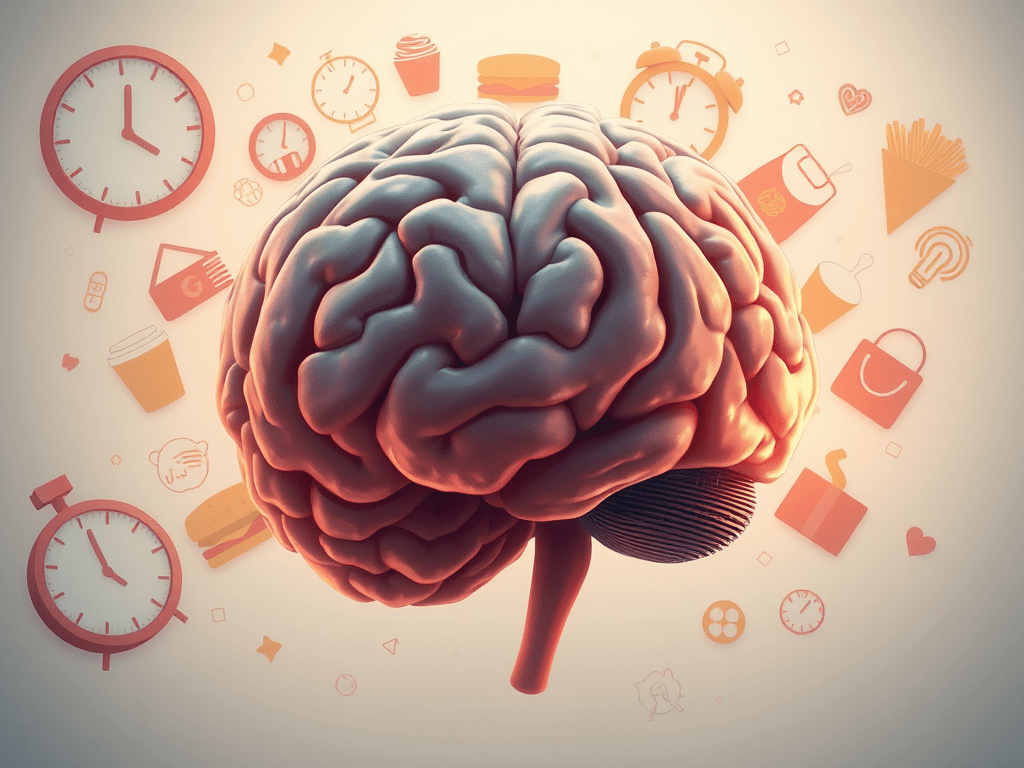
Hashtags:
#BrainHealth #MentalFitness #Neuroscience #HabitsMatter #HealthyMind #CognitiveWellness #BetterLiving #NeuroTips #MindCare
Introduction
You take care of your body — but what about your brain?
In a world full of screens, stress, and sugar, our daily habits silently affect the most powerful organ we have. This isn’t about memory loss when you’re 70 — it’s about decision fatigue, brain fog, anxiety, and emotional imbalance in your 20s and 30s.
This blog dives into:
✔ 8 everyday habits that harm your brain health
✔ Stories, science, and warning signs to watch for
✔ Easy lifestyle shifts that protect your cognitive power
1. Skipping Sleep
You think: “I’ll catch up later.”
Your brain thinks: “I’m breaking down now.”
📘 Example:
A college student routinely pulls all-nighters to study. He forgets words in class and can’t focus for more than 10 minutes.
🧠 Science:
Lack of sleep reduces grey matter volume and impairs memory consolidation (Journal of Neuroscience, 2014).
✅ Fix: Sleep 7–8 hours. It’s not lazy — it’s neurological repair.
2. Mindless Scrolling for Hours
You call it “winding down.” But it’s winding up your stress and shrinking your attention span.
📘 Story:
After 2 hours of doomscrolling, you feel anxious and mentally foggy. That’s not “relaxation” — that’s stimulation overload.
🧬 Science:
Constant digital input reduces prefrontal cortex efficiency — the part responsible for focus, impulse control, and decision-making.
✅ Fix: Set screen-time limits. Swap 30 mins of scrolling for journaling, walking, or music.
3. Eating Too Much Sugar
Not just bad for your body — it’s brain poison too.
📘 Story:
After a sugar-heavy lunch, you feel tired, irritable, and mentally “sluggish.” That’s your brain crashing.
🧠 Scientific Insight:
High sugar diets impair memory and reduce the production of brain-derived neurotrophic factor (BDNF) — a key molecule for learning (Neuroscience Letters).
✅ Fix: Reduce added sugar. Choose brain-boosting foods like berries, nuts, eggs, and leafy greens.
4. Lack of Movement
You think you’re just tired. But your brain is starving — for oxygen.
📘 Example:
A remote worker sits 10+ hours daily. She feels mentally dull and emotionally heavy.
🧠 Science:
Exercise increases blood flow to the brain, boosts mood, and grows new brain cells — especially in the hippocampus (memory center).
✅ Fix: Move every 30 minutes. Aim for 20–30 minutes of moderate activity daily.
5. Multitasking All the Time
You pride yourself on “getting it all done.” But your brain is paying the price.
📘 Story:
A manager juggles meetings, emails, and messages simultaneously. By 3pm, he’s drained — but accomplished very little deeply.
🧬 Scientific Insight:
Multitasking lowers IQ temporarily and reduces productivity by up to 40% (Stanford University Research).
✅ Fix: Try deep work. Focus on one task at a time. Use the Pomodoro technique.
6. Holding in Emotions
You think it makes you stronger. But suppressed emotions weaken brain-body resilience.
📘 Example:
You tell yourself “I’m fine” every day — but feel emotionally numb and reactive in private.
🧠 Science:
Repressed emotions increase stress hormone levels and affect neural activity in the amygdala and prefrontal cortex.
✅ Fix: Journal. Vent to someone you trust. Seek therapy if needed. Express, don’t suppress.
7. Not Challenging Your Brain
You’ve stopped learning. Your brain knows it — and it’s quietly fading.
📘 Story:
After years in the same job with repetitive tasks, your problem-solving feels rusty and you struggle to adapt to new challenges.
🧠 Science:
Neuroplasticity thrives on challenge. Without it, cognitive decline accelerates — even in your 30s (Nature Reviews Neuroscience).
✅ Fix: Learn new skills. Try puzzles, languages, music, or coding. Challenge = growth.
8. Isolation and Loneliness
You might think solitude is harmless. But long-term loneliness rewires your brain in unhealthy ways.
📘 Example:
A remote worker doesn’t talk to anyone beyond work tasks. Slowly, anxiety and brain fog increase.
🧠 Scientific Insight:
Social connection boosts oxytocin and serotonin, improving emotional processing and memory.
✅ Fix: Call a friend. Join a group. Connect intentionally — your brain depends on it.
Why This Blog Matters
🧠 For Students
Protecting your brain now means performing better in studies — and life.
🧘 For Professionals
Cognitive clarity means better decisions, communication, and energy.
👵 For Long-Term Health
These habits, if unchecked, contribute to dementia, Alzheimer’s, and burnout.
Final Thought: Your Brain Is the CEO of Your Life
“You can’t build a sharp life with a foggy mind.”
It’s time to treat your brain like the priceless, high-performing machine it is. Drop the habits that harm. Start the habits that heal.
Your future self — smarter, calmer, and clearer — is waiting.


Leave a comment